
Jiuzhaigou Scenic Area
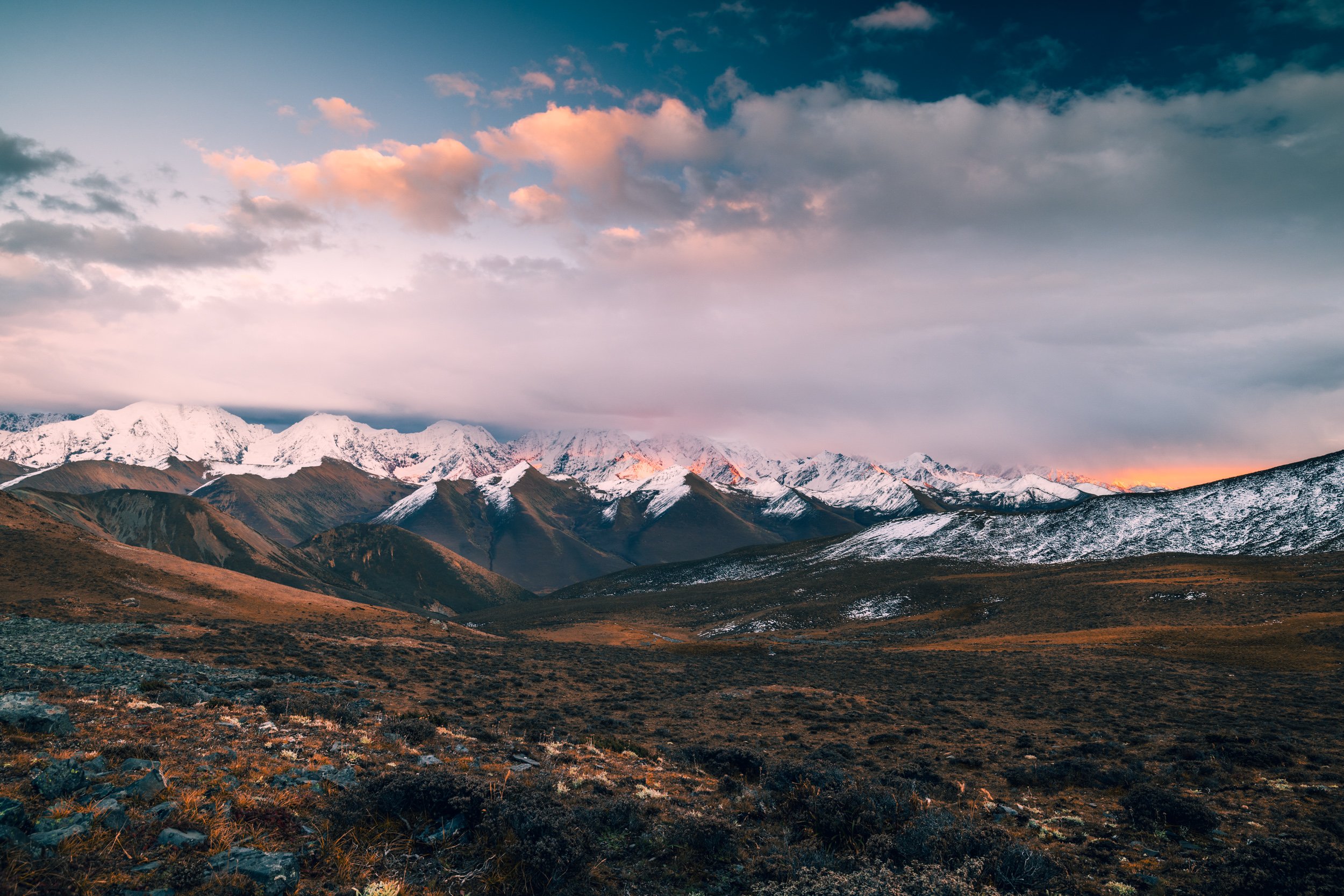
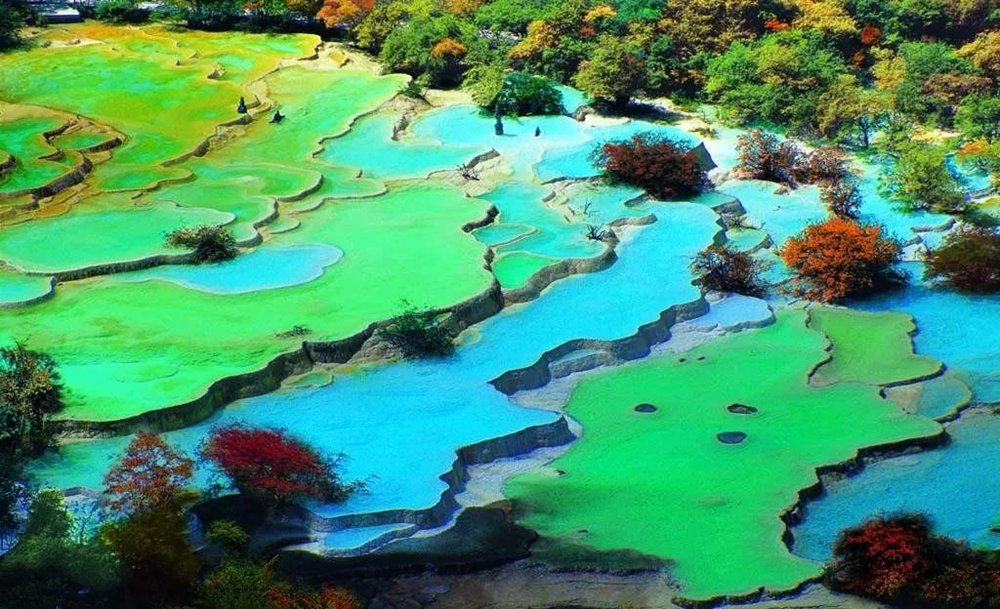
Located less than 90 kilometers from Jiuzhaigou, in Songpan, lies a captivating sacred land—Huanglong Scenic Area. Due to its close proximity to Jiuzhaigou, it has long been overshadowed by Jiuzhaigou’s fame, leading many visitors to mistakenly believe that Huanglong is part of the Jiuzhaigou Scenic Area. This is incorrect—Huanglong is not Jiuzhaigou!
In 1982, the “Huanglong Temple–Jiuzhaigou Scenic Area” was listed as one of the first national key scenic areas in China. On December 14, 1992, at the 16th session of the UNESCO World Heritage Committee held in New Mexico, USA, representatives from 124 member countries voted to include Huanglong in the World Natural Heritage List. Huanglong Scenic Area is also recognized as a World Biosphere Reserve, a National Geological Park, a National 5A Tourist Attraction, and a National Nature Reserve of China. After more than 30 years of dedicated efforts, Huanglong has achieved the highest international and national honors in heritage conservation, landscape value, and tourism management. It is truly a natural treasure and a shining jewel of western Sichuan.
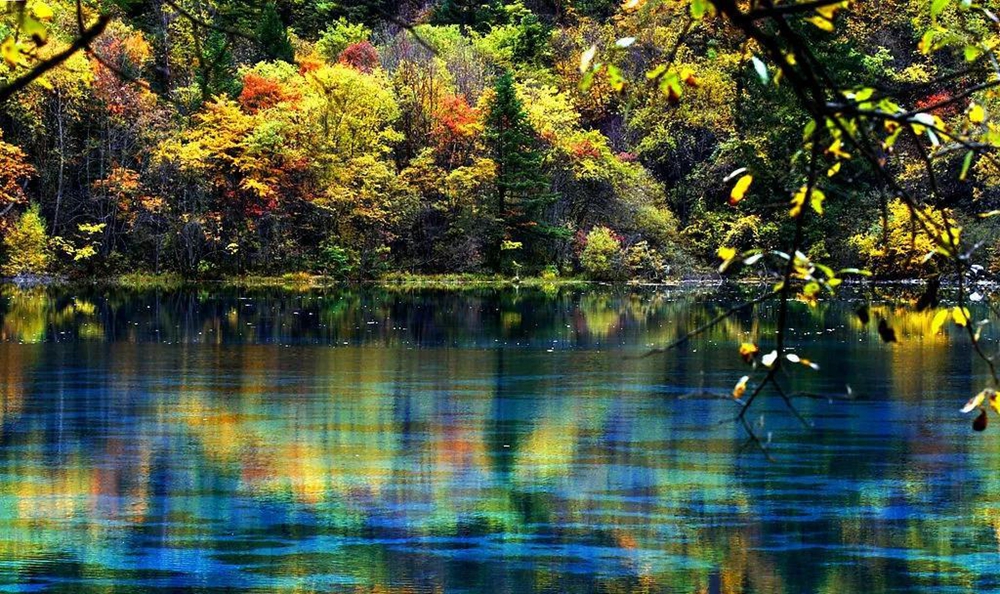
The landscapes of Jiuzhaigou are closely related to natural phenomena such as barrier lakes. High-altitude geological activity laid the foundation of Jiuzhaigou’s scenery, while the combined effects of flowing water, vegetation, and calcification created its beautiful lakes, rivers, waterfalls, and streams. The yellowish base of Pearl Shoal Waterfall and Nuorilang Waterfall is formed by calcification. Although calcification can also be observed in some lakes of Jiuzhaigou, it is not the sole factor shaping its landscapes.
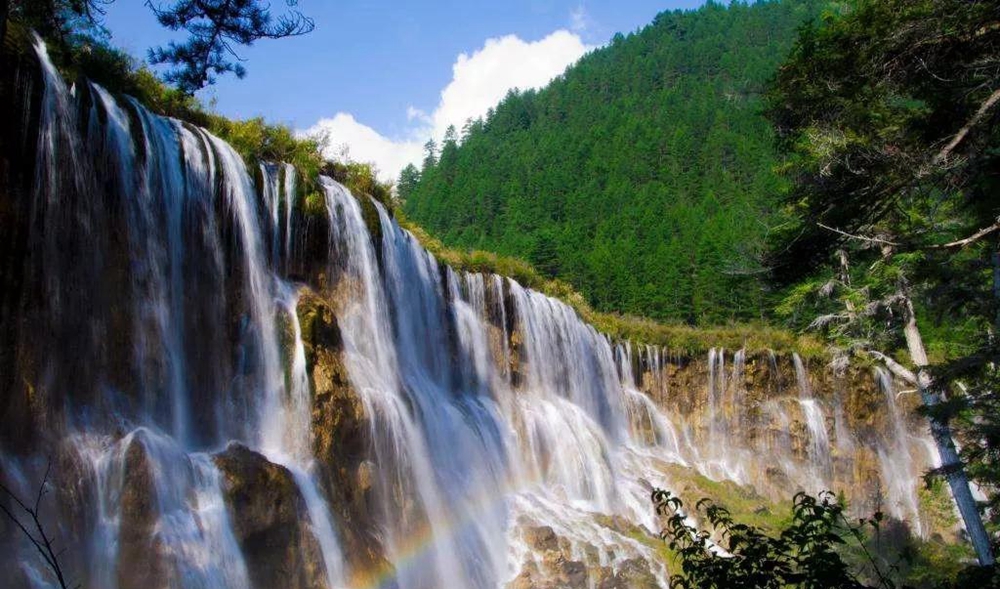
The beauty of Jiuzhaigou lies in its water, where you can witness water in all its natural forms: clouds, mist, ice and snow, waterfalls, rapids, and gently flowing streams. Jiuzhaigou is truly a “paradise of water.”
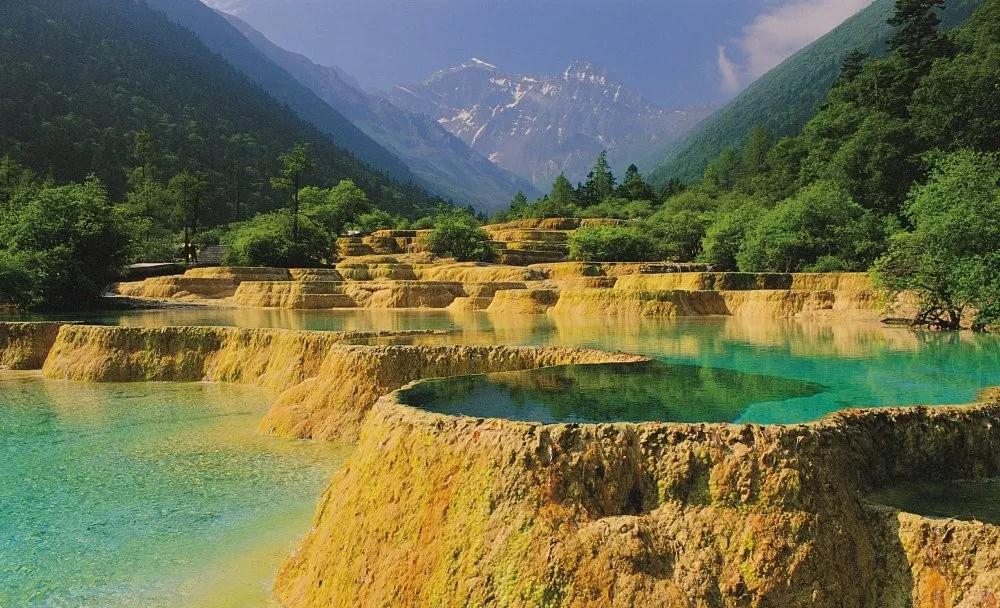
In contrast, the formation of Huanglong Scenic Area is more singular in nature. Here, deep underground water dissolves calcium carbonate from rock formations, which emerges at the surface to form karst landscapes. Under the influence of temperature, pressure, and carbon dioxide, large amounts of calcium carbonate are dissolved. When the water surfaces in Huanglong Valley, carbon dioxide is released, causing changes in pH levels. The calcium carbonate becomes unstable and precipitates in large quantities. Under suitable terrain conditions, it solidifies into colorful pools, travertine terraces, waterfalls, and caves—creating distinctive karst calcification landscapes. Similar formations can be seen in places such as Pamukkale in Turkey and Baishuitai in Lijiang, though their scale and diversity are not as rich as Huanglong’s. The travertine formations in Pamukkale are predominantly white, resembling cotton. Only in Huanglong does the calcification take on a brilliant golden-yellow hue—symbolizing the most noble imperial color in Chinese culture. Viewed from above, Huanglong Valley stretches about 3,600 meters long and 30–170 meters wide, resembling a golden dragon winding through dense forests. Thus, this stunning place earned its radiant name—Huanglong (“Yellow Dragon”).
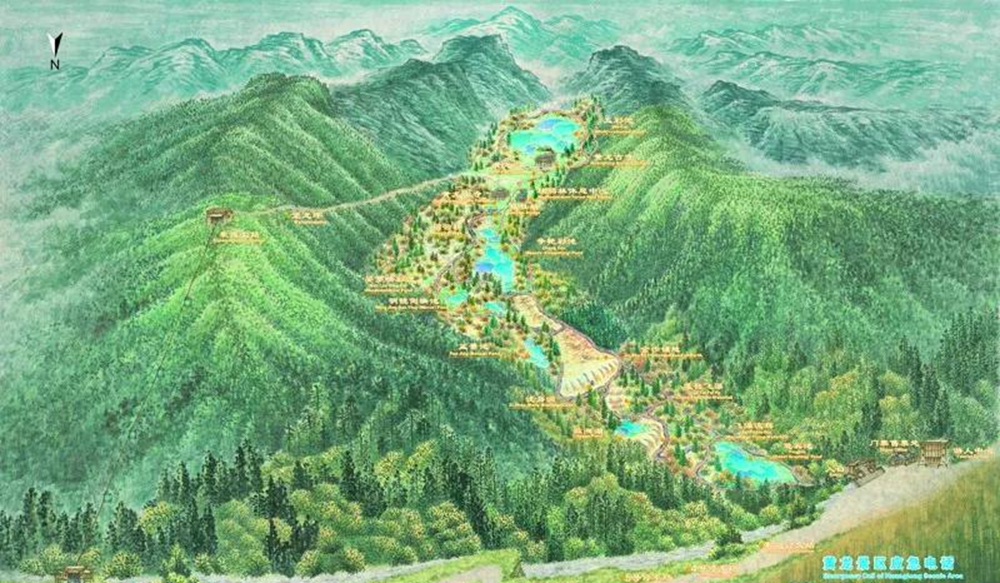
The beauty of Huanglong lies in its pools. Its surface calcification forms are incredibly diverse, including colorful pools, terraces, waterfalls, and caves. Huanglong represents the most diverse, intricate, colorful, and large-scale karst landscape in the world. It is an open-air natural museum for karst research and a geological wonder of global significance.
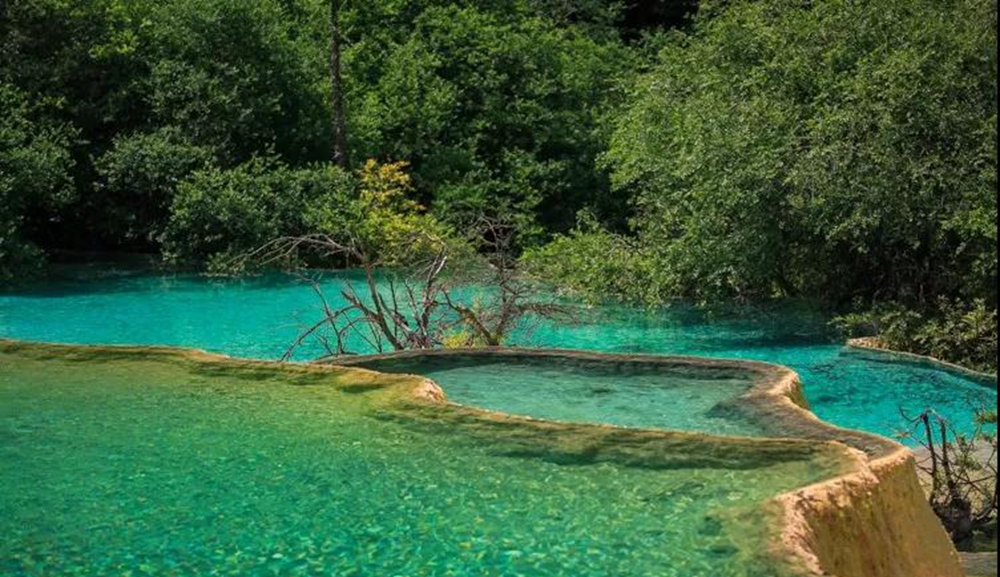
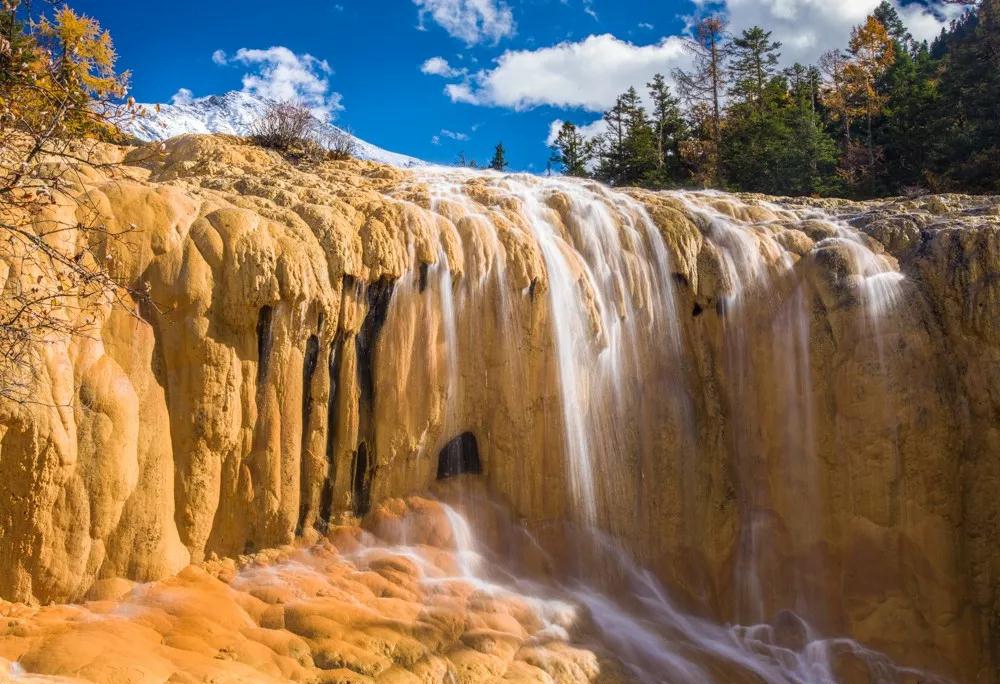
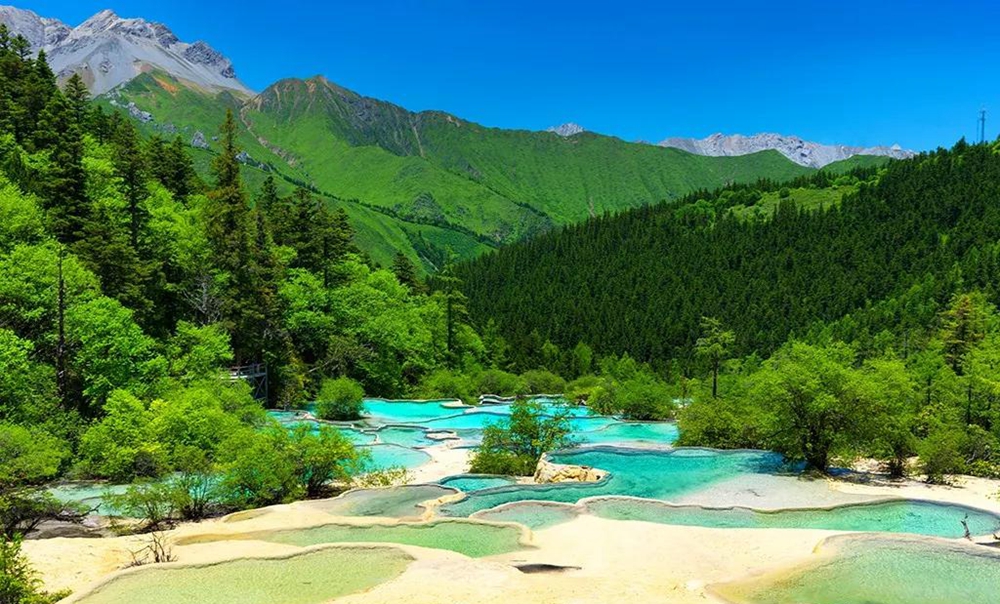
Surrounded by the vast Min Mountains and endless forests, more than 5,100 travertine pools, terraces, and waterfalls of varying shapes form a dazzling golden landscape, like a natural painting. As Qing Dynasty scholar Hu Shirong once described: “Jade peaks pierce the sky, ancient pines line the snowy path; golden sands pave the earth, layers of emerald waters flow through Huanglong.” Once you step into Huanglong, you will experience this poetic scenery for yourself.
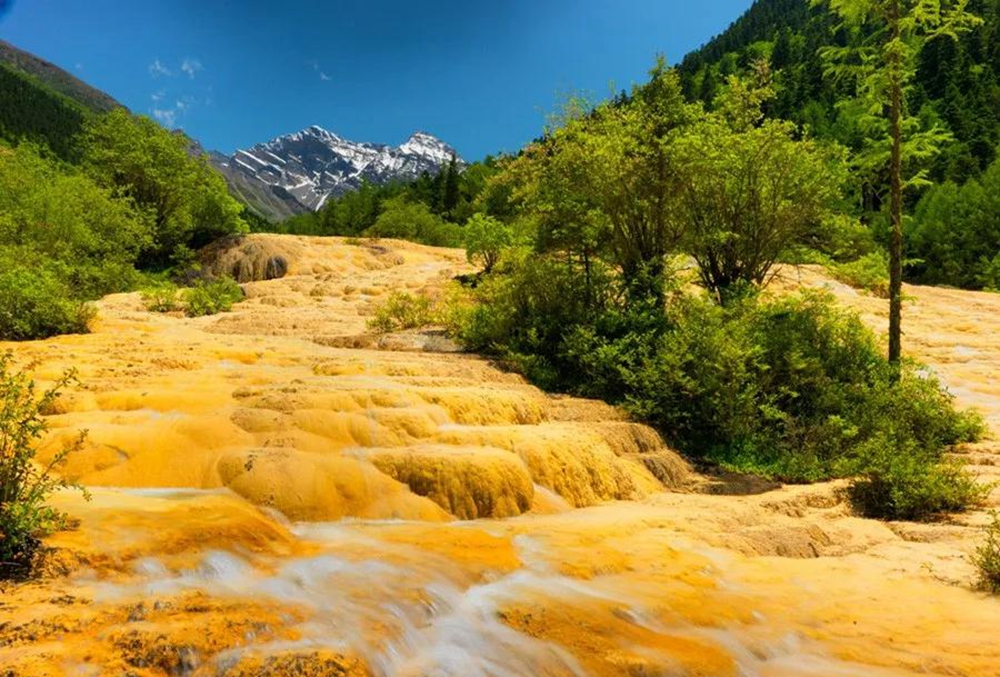
Why do Huanglong’s pools display such brilliant colors? This is because the water originates from karst formations and is extremely pure, containing a large amount of negative ions. These ions scatter short-wavelength light—primarily blue and green—very effectively in the water. As a result, under sunlight, the pools appear vividly colorful. Additionally, some pools provide ideal conditions for calcium-loving microorganisms and algae. The accumulation of these organisms, in various colors, further enhances the vibrant hues of the water.
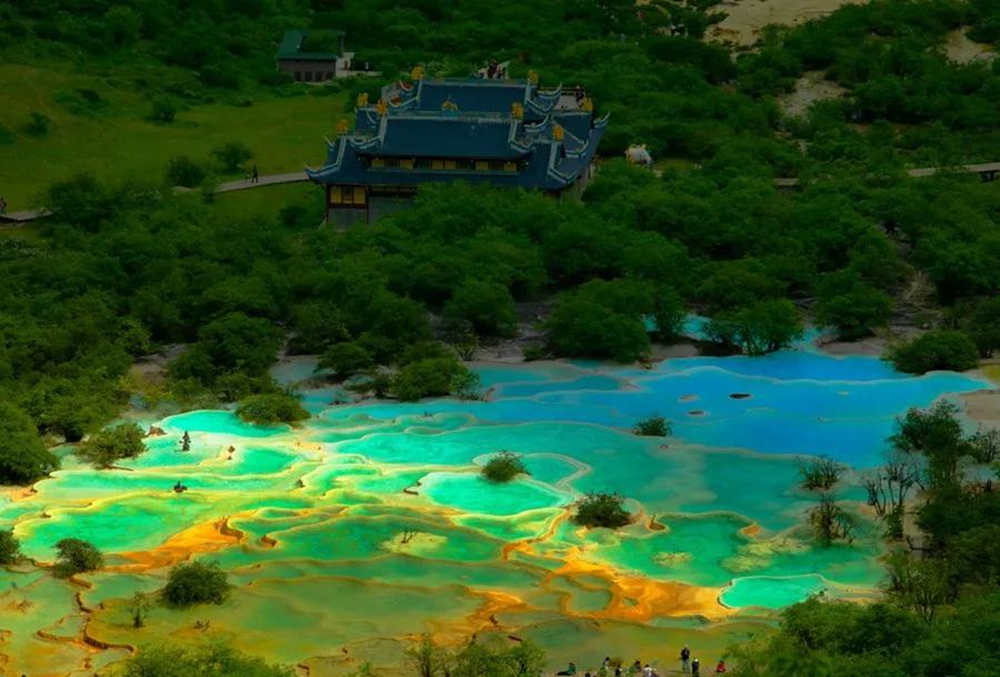
Huanglong is truly the “king of pools under heaven”!
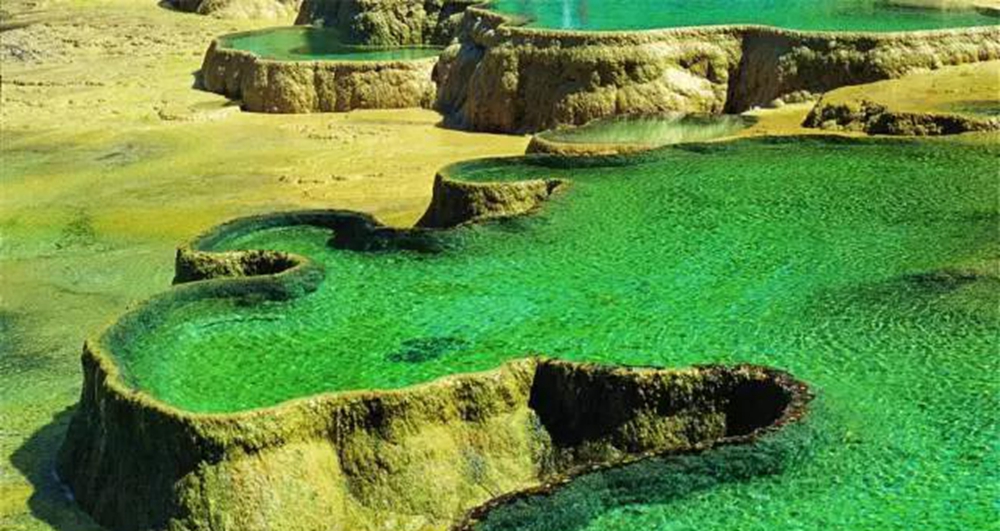
The purpose of this short article is not to compare Huanglong with Jiuzhaigou, but to highlight their different scenic values. We hope visitors will not overlook Huanglong, a world-class destination in its own right, and recognize that alongside Jiuzhaigou lies another equally remarkable and high-quality scenic area—Huanglong in Aba.
Jiuzhaigou in Sichuan is renowned for its colorful lakes, waterfalls, and snow-capped mountains, earning it the reputation of a fairytale world and making it one of China's most beautiful natural scenic areas.