
Acupuncture
Video Story
According to statistics from the World Health Organization, 103 member states currently recognize the use of acupuncture, with 29 having established laws and regulations governing traditional medicine and 18 including acupuncture in their medical insurance systems. The World Federation of Acupuncture-Moxibustion Societies, headquartered in China, has 194 member organizations from 53 countries and regions; the World Federation of Chinese Medicine Societies also has 257 international member organizations from 67 countries and regions, 146 professional committees, and 13 industry development (cooperation) committees.
Traditional Chinese medicine (TCM) is gradually entering the international medical system and has been registered as pharmaceuticals in countries such as Russia, Cuba, Vietnam, Singapore, and the United Arab Emirates. The results of the fourth global survey of China's national image conducted last year by the Center for International Communication Studies of the China Foreign Languages Publishing Administration showed that TCM was considered the most representative Chinese element, with nearly 50% of respondents choosing it. It can be said that TCM has moved to the center stage of world traditional medicine, and the Chinese wisdom contributed by TCM to the world is being recognized by more and more people globally.
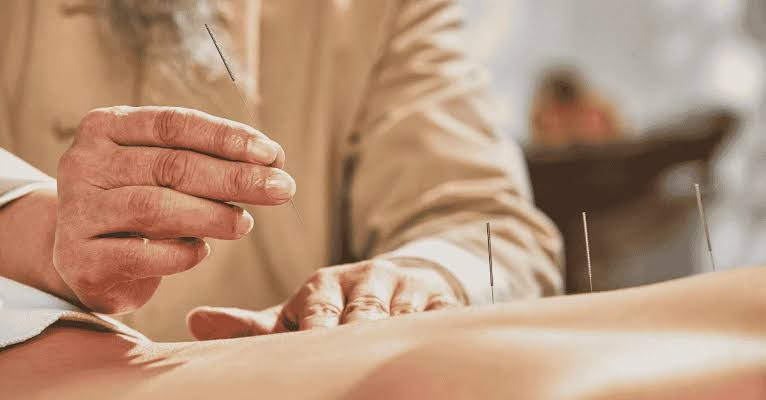
As an important component of TCM, acupuncture, with a history of over 2000 years, is one of the few disciplines in my country that possesses international influence, holds a leading position, and is expected to achieve original innovative breakthroughs. Acupuncture, with its wide range of indications, rapid and significant therapeutic effects, simple and easy operation, and economical medical costs, along with minimal toxic side effects, has become a traditional medical method widely accepted by countries around the world. my country has set clear goals and development paths for the academic research and application of acupuncture, using it as a breakthrough to promote the internationalization of traditional Chinese medicine.
Acupuncture has become the most widely used alternative medicine therapy in the world.
On August 24, 2017, during a free medical consultation event for overseas Chinese in Europe, organized by the Overseas Chinese Affairs Office of the State Council and the State Administration of Traditional Chinese Medicine, Huang Shixi, chief physician of the Acupuncture Department of Guang'anmen Hospital of the China Academy of Chinese Medical Sciences, brought his more than 30 years of experience and techniques to Budapest. He provided fire needling treatment to more than 60 patients on-site, using cupping therapy to allow TCM practitioners from various European countries to experience the magical charm of traditional Chinese medicine. "Fire needle therapy is most suitable for treating rheumatoid arthritis, post-stroke sequelae, trigeminal neuralgia, facial paralysis, and chronic rhinitis. It also has special effects such as 'pain relief upon needle insertion' and 'cure upon needle insertion' for acute illnesses like acute lumbar sprains, acute mastitis, and herpes zoster," said Huang Shixi.
The "Premature Ovarian Failure Specialty Clinic," established in 2011 by the Acupuncture Hospital of the China Academy of Chinese Medical Sciences, is the first specialized clinic in China to use a combination of acupuncture and medication to treat premature ovarian failure. Its founder is Fang Yigong, the chief physician of the hospital. By combining traditional Chinese medicine theory with modern medical theory, Fang Yigong innovated a unique "Thirteen Needles for Regulating Menstruation and Promoting Fertility," achieving good clinical results in the treatment of premature ovarian failure, infertility, and other gynecological diseases. In the six years since its establishment, the clinic has seen approximately 100 patients daily, with a peak of 150, and has attracted many domestic and international students for further study.
Currently, acupuncture is used in all countries in Asia and South America, and its application rates in Europe and Africa are 98% and 93%, respectively. As of the end of January 2017, there were over 380,000 acupuncture practitioners worldwide, and the number of people who had received treatment from Traditional Chinese Medicine (TCM), acupuncture, massage, or Qigong exceeded one-third of the world's total population. "Besides China, there are over 100,000 TCM medical (acupuncture) institutions in other countries. There are six acupuncture inheritance bases both domestically and internationally, covering the United States, Canada, and Australia. Acupuncture has become the most widely used alternative medicine therapy in the world," said Liu Baoyan, President of the World Federation of Acupuncture-Moxibustion Societies. He still remembers telling his students in Finland many years ago, "To learn how to use fire needles, you must first experience it yourself." Unexpectedly, "everyone stretched out their arms for me to insert the needles."
To revitalize traditional Chinese medicine (TCM) and enhance the reputation of acupuncture, the World Federation of Acupuncture-Moxibustion Societies has conducted over 30 "Belt and Road TCM and Acupuncture Showcase" activities in countries along the Belt and Road Initiative since 2010. These activities have taken place in Italy, Mauritius, Poland, the Netherlands, and other countries, promoting TCM and acupuncture to practitioners through academic exchanges, cultural exhibitions, expert consultations, and popular science lectures.
Shanghai University of Traditional Chinese Medicine has also established overseas TCM centers in the Czech Republic, Malta, and Morocco in recent years, set up the first Confucius Institute for TCM in the United States, and launched a trial operation of its US TCM center and a TCM center in Mauritius this year. In particular, the Malta TCM Center, established in cooperation with the University of Malta, has not only successfully launched clinical TCM services, but its first cohort of students in the "TCM Acupuncture and Culture" master's program has also graduated. "Over the past five years, we have sent more than 860 students to overseas and Hong Kong, Macao, and Taiwan for exchange and study, aiming to promote the cultivation of TCM talents with a global perspective," said Xu Jianguang, President of Shanghai University of Traditional Chinese Medicine.
"Currently, the Belt and Road Initiative provides a rare opportunity for Traditional Chinese Medicine (TCM) to 'go global.' We should fully leverage the advantages of acupuncture in 'preventive treatment,' allowing it to play a leading role in disease prevention, a synergistic role in the treatment of major diseases, and a core role in disease rehabilitation. Furthermore, we should promote the transformation of acupuncture service models, constructing a medical service model of 'one acupuncture, two moxibustion, three medications,'" Liu Baoyan pointed out.
Standardization Construction Achieves Remarkable Results
With the widespread dissemination of TCM globally, the scientific, standardized, and effective use of TCM has attracted the attention of experts worldwide. In September 2009, the International Organization for Standardization/Technical Committee on Traditional Chinese Medicine (ISO/TC 249) was officially established, with its secretariat located in China, undertaken by Shanghai University of Traditional Chinese Medicine. Under the leadership of ISO headquarters in Geneva, ISO/TC 249 conducts specific international standardization work on TCM through its secretariat. As of November 2017, ISO/TC 249 had officially and independently published 22 international standards for Traditional Chinese Medicine (TCM), including disposable sterile acupuncture needles, Asian ginseng seeds and seedlings, methods for detecting heavy metals in TCM, equipment for decocting TCM, moxibustion tools, and a TCM coding system. This represents a breakthrough for ISO in TCM international standards and has a profound impact on promoting international trade and internationalization of TCM. In addition, 49 international standards are currently under development.
“Besides establishing liaisons and organizing cooperation with relevant international organizations, the ISO/TC 249 Secretariat has spearheaded several international TCM standardization forums themed ‘Seeking Consensus and Building Cooperation,’ inviting experts from the Chinese Pharmacopoeia, Japanese Pharmacopoeia, United States Pharmacopoeia, European Pharmacopoeia, and Thai Pharmacopoeia Commission to participate, share experiences, discuss cooperation models for international standards of Chinese herbal medicine, seek consensus, establish cooperation, further promote global standardization of Chinese herbal medicine, and improve the quality and safety of Chinese herbal medicine globally,” said Xu Jianguang.
In addition to ISO/TC249, Shanghai University of Traditional Chinese Medicine also undertakes the World Health Organization (WHO) International Classification of Diseases, 11th Revision (ICD 11) project on traditional medicine. This marks the first time traditional medicine has been included in the WHO's international disease classification coding system, symbolizing its integration into the mainstream international medical management framework. In December 2014, the Standardization Construction Committee of the World Federation of Chinese Medicine Societies (WFCMS) was also established at Shanghai University of Traditional Chinese Medicine, responsible for and participating in the development planning and publication of WFCMS international standards. Currently, the three major international organizations related to traditional Chinese medicine—WHO, ISO, and WFCMS—and their international standardization platforms for traditional Chinese medicine are all located at Shanghai University of Traditional Chinese Medicine.
During the interview, the reporter learned that since its establishment in Beijing in 2003, the World Federation of Chinese Medicine Societies has published 21 international standards. "Among them, the 'International Standards for Basic Terminology of Traditional Chinese Medicine' series has been successively published, including Chinese-English, Chinese-French, Chinese-Western, Chinese-Portuguese, Chinese-Italian, Chinese-Russian, Chinese-Hungarian, Chinese-German, and Chinese-Thailand standards. These standards have had a profound impact on the world, with many national industry organizations signing and adopting them. Some TCM education institutions around the world have gradually used them in their teaching, playing an important role in the inheritance of TCM academic knowledge and improving the accuracy of TCM technology application worldwide," said Sang Binsheng, Secretary-General of the World Federation of Chinese Medicine Societies.

No Comments Yet
Be the first to share a thought on this video.